
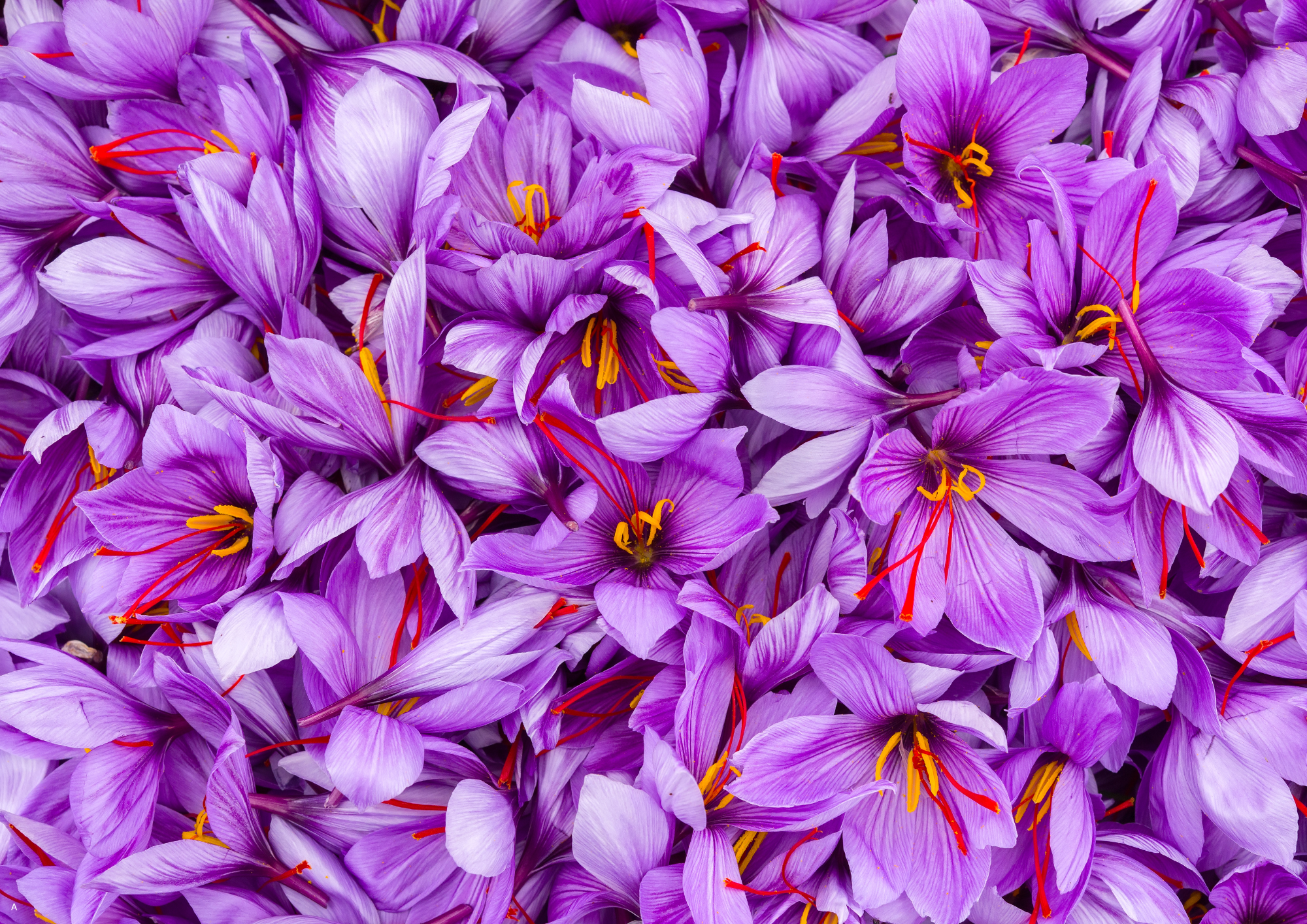
Saffron is one of the most expensive spices in the world. It comes from the dried red stigma of the Crocus sativus flower. Each flower has only three stigmas. Around 150,000 to 200,000 flowers are needed to produce 1 kg of dried saffron, which explains why saffron is rare and expensive [1].
Fortunately, a tiny amount of it is sufficient to experience its health benefits. However, it is vital to know not only the amount of saffron a product contains, but what kind of saffron it uses and whether the extract has been studied in humans.
FIHI Nutrition’s Super Happy Saffron Vanilla Latte uses 30 mg of Affron® saffron stigma extract in a caffeine-free drink mix with coconut milk powder, vanilla extract, and monk fruit. Thats it. The extract matters for the science. Affron is a standardized, high potency saffron extract, that provides consistent results.
Affron has been studied in adults with low mood, teenagers with mild depressive and anxiety symptoms, adults with sleep complaints, and women in perimenopause. It has also been tested in absorption work and animal studies that looked at melatonin production and stress resilience [2-11].
Why standardized extract matters in saffron for mood and stress
When people search for saffron for mood, saffron for stress, or saffron for emotional wellness, they often treat all saffron products as if they are the same. They are not.
Culinary saffron can vary because of growing conditions, harvesting, drying, storage, and extraction method [1]. If a study used one specific extract, the results do not automatically transfer to every powder, capsule, or latte blend sold online.
A standardized extract is meant to reduce that problem. It is produced so that important compounds stay within a defined range from batch to batch. In saffron research, the most discussed compounds are crocins, crocetin, picrocrocin, and safranal. Crocetin matters because it appears in the bloodstream after ingestion and helps show that the extract is being absorbed [6].
This is one reason the Affron studies deserve attention. They are not simply testing random saffron. They are testing a science-backed, standardized extract at a stated dose. In the clinical literature linked to this extract, 28 to 30 mg per day appears again and again. That kind of consistency is more useful than vague claims about saffron being rich or potent [2,5,7,8,11].


Human studies at a glance
|
Year |
Population |
Dose / duration |
Main point |
|
2017 |
Adults with low mood |
28 or 22 mg/day; 4 weeks |
28 mg/day showed the clearest mood, stress, and anxiety signal [2]. |
|
2018 |
Teenagers 12-16 years |
8 weeks |
Self-ratings improved more clearly than parent ratings [3]. |
|
2018 |
Adults with sleep concerns |
4 weeks |
Japanese pilot study suggested better sleep quality [4]. |
|
2020 |
Adults with poor sleep |
14 mg twice daily; 28 days |
Better insomnia severity, restorative sleep, and sleep-quality ratings [5]. |
|
2020 |
Healthy adults, PK study |
Single 56 or 84 mg dose |
Crocetin appeared in blood within 60 to 90 minutes [6]. |
|
2021 |
Adults with poor sleep |
14 or 28 mg before bed; 28 days |
Higher evening melatonin and better sleep ratings [7]. |
|
2021 |
Perimenopausal women |
14 mg twice daily; 12 weeks |
Psychological symptoms improved more than placebo [8]. |
|
2025 |
Adults with low mood |
3 months |
Largest trial in this line; benefit on mood and wellbeing [11]. |
What human studies say about saffron for mood, stress and emotional wellness
The first Affron mood trial was published in 2017. It included 128 adults who reported low mood but did not have a formal diagnosis of depression. Participants were randomized to 28 mg per day, 22 mg per day, or placebo for four weeks. The 28 mg dose led to a significant drop in negative mood and in symptoms linked to stress and anxiety. The 22 mg dose did not show the same effect [2].
That detail matters because it suggests that dose is not just a footnote. It may decide whether the effect is noticeable at all. For someone trying to understand saffron extract for mood, that is far more useful than a broad statement that saffron may help [2].
The next important paper was in teenagers. In 2018, a randomized, double-blind, placebo-controlled trial tested Affron in 12- to 16-year-olds with mild-to-moderate anxiety and depressive symptoms over eight weeks. The main improvements were reported from the adolescents’ own perspective. Parent ratings were less consistent [3].
That does not weaken the study. It gives it more realism. Mood is partly subjective, and that is exactly why self-report still matters in this area. The study does not say saffron fixes anxiety or depression. It says a standardized saffron extract improved symptoms in a non-clinical youth group, especially in the adolescents’ own ratings [3].
The largest study on this extract so far was published in 2025 in the Journal of Nutrition. It enrolled more than 200 adults experiencing low mood and followed them for three months. The study reported beneficial effects of saffron supplementation on depressive symptoms and related wellbeing measures compared with placebo [11]. For readers asking whether saffron helps mood, this is the strongest human trial in this specific research line because it is the largest and one of the longest.
There is also a useful trial in perimenopausal women. In a 12-week study, 86 women received either placebo or 14 mg twice daily. Based on data from 82 participants, saffron was linked to greater improvements in mood and psychological symptoms. Anxiety scores fell by 33% and depression scores by 32% from baseline to week 12. Negative affects also improved more than placebo. At the same time, the study did not show broader benefits across all menopausal symptoms or all quality-of-life measures [8].
That balanced result is important. It shows where the signal was stronger and where it was not. The best human data for this extract are not telling us that saffron solves every problem. They are telling us that the mood and stress side of the picture looks more convincing than the idea of broad symptom relief in every area [8].
What human studies say about sleep quality
Poor sleep and low mood often occur together. That means saffron for stress and saffron for mood cannot be separated completely from saffron and sleep.
An early Japanese trial published in 2018 reported improved sleep quality with saffron extract in adults. The study is cited less often because it was published in a regional journal, but it still matters because it pointed in the same direction as later trials [4].
A stronger sleep study was published in 2020 in the Journal of Clinical Sleep Medicine. It enrolled 63 adults aged 18 to 70 years who had self-reported sleep problems. Participants took 14 mg twice daily or placebo for 28 days. Based on data from 55 participants, saffron led to greater improvements in total insomnia severity, restorative sleep scores, and diary-based sleep quality ratings than placebo. No adverse effects were reported [5].
One practical point from that trial stands out. Some improvements appeared within seven days [5]. That does not mean every person will notice a benefit in a week. It does mean that sleep-related effects may show up sooner than mood-related effects, which often need several weeks in clinical trials.
The 2021 Sleep Medicine study pushed the sleep question further. It tested evening dosing of Affron one hour before bed and compared 14 mg, 28 mg, and placebo over 28 days. The extract improved sleep quality ratings, mood after waking, and evening melatonin concentrations. Cortisol did not change in the same way [7]. That matters because it offers a plausible biological link between the extract and sleep regulation, while also showing that not every stress-related hormone moves in parallel.
For someone searching how long saffron takes to work, the sleep trials give the clearest answer. Some sleep changes may appear within one to four weeks. Mood and emotional wellness studies usually run four to 12 weeks, and the largest recent trial lasted three months [2,5,7,8,11].
Why absorption and mechanism studies matter
Clinical trials tell us whether people feel or function differently. Mechanism studies help explain why.
The 2020 pharmacokinetic study showed that after people took a commercial saffron extract, crocetin appeared in plasma within 60 to 90 minutes. The study also showed about 40% bioaccessibility for crocin isomers during in vitro digestion and a rise in safranal after digestion [6].
The main message is simple: the extract is not just swallowed and wasted. Its main compounds are processed and absorbed in a measurable way.
Two 2023 animal studies further help understand why the product with standardized extract works well. One of the studies, found that Affron supplementation reduced kynurenine levels and promoted melatonin synthesis in rats [9].
The other used a chronic mild stress model in Wistar rats and found effects on the hypothalamic-pituitary-adrenal axis and stress resilience markers [10].
These are not human outcomes, so they should not be presented as proof of benefit in consumers. Still, they help explain why the extract keeps being studied for sleep, mood, and stress.
What about saffron supplement side effects and safety?
This is one of the most common question asked by people.
In the published Affron human trials, the extract was generally well tolerated. The adult mood trial reported no side effects. The 2020 sleep trial reported no adverse effects. The perimenopause trial reported no major adverse events [2,5,8].
However, when it comes to its safety, it is vital to understand that this does not essentially requires clinical data. Saffron’s safety has been proven through its culinary use for several centuries. These clinical trials were still needed, just to show that standardized extract Affron is also equally safe.
How to judge a saffron product
If the goal is to choose a saffron supplement for mood or a saffron extract for stress, the label should answer four questions.
Does the product name the extract?
Does it use a dose close to the human studies?
Does it explain that the saffron comes from stigma extract?
Does it avoid hiding the active amount inside a proprietary blend?
This is where a product like FIHI Super Happy becomes easier to place. The vanilla and coconut make it an easy delicious drink. The 30 mg standardized saffron extract is mainly responsible for its health benefits. That amount sits close to the 28 to 30 mg range used repeatedly in the human trials discussed above [2,5,8,11].
The bigger point is that standardization, dose, and human evidence should decide whether a saffron product deserves attention. Sure, saffron is not a medication, nonetheless, studies do suggest that its regular use is good for emotional wellness, and these benefits are not merely due to its aroma.
References
1. Mzabri I, Addi M, Berrichi A. Traditional and Modern Uses of Saffron (Crocus sativus). Cosmetics. 2019;6(4):63. doi:10.3390/cosmetics6040063.
2. Kell G, Rao A, Beccaria G, Clayton P, Inarejos-García AM, Prodanov M. affron®, a novel saffron extract (Crocus sativus L.) improves mood in healthy adults over 4 weeks in a double-blind, parallel, randomized, placebo-controlled clinical trial. Complement Ther Med. 2017;33:58-64. doi:10.1016/j.ctim.2017.06.001.
3. Lopresti AL, Drummond PD, Inarejos-García AM, Prodanov M. affron®, a standardised extract from saffron (Crocus sativus L.) for the treatment of youth anxiety and depressive symptoms: a randomised, double-blind, placebo-controlled study. J Affect Disord. 2018;232:349-357. doi:10.1016/j.jad.2018.02.070.
4. Nishide A, Fujita T, Nagaregawa Y, Shoyama Y, Ohnuki K, Shimizu K, et al. Sleep enhancement by saffron extract in randomized control trial. Japanese Pharmacology and Therapeutics. 2018;46(8):1407-1415.
5. Lopresti AL, Smith SJ, Metse AP, Drummond PD. Effects of saffron on sleep quality in healthy adults with self-reported poor sleep: a randomized, double-blind, placebo-controlled trial. J Clin Sleep Med. 2020;16(6):937-947. doi:10.5664/jcsm.8376.
6. Almodóvar P, Briskey D, Rao A, Prodanov M, Inarejos-García AM. Bioaccessibility and pharmacokinetics of a commercial saffron (Crocus sativus L.) extract. Evid Based Complement Alternat Med. 2020;2020:1575730. doi:10.1155/2020/1575730.
7. Lopresti AL, Smith SJ, Drummond PD. An investigation into an evening intake of a saffron extract (affron®) on sleep quality, cortisol, and melatonin concentrations in adults with poor sleep: a randomised, double-blind, placebo-controlled, multi-dose study. Sleep Med. 2021;86:7-18. doi:10.1016/j.sleep.2021.08.001.
8. Lopresti AL, Smith SJ. The effects of a saffron extract (affron®) on menopausal symptoms in women during perimenopause: a randomised, double-blind, placebo-controlled study. J Menopausal Med. 2021;27(2):66-78. doi:10.6118/jmm.21002.
9. De la Fuente Muñoz M, Román-Carmena M, Amor S, García-Villalón ÁL, Espinel AE, González-Hedström D, et al. Effects of supplementation with the standardized extract of saffron (affron®) on the kynurenine pathway and melatonin synthesis in rats. Antioxidants (Basel). 2023;12(8):1619. doi:10.3390/antiox12081619.
10. Kim CY, Ko K, Choi SH, Lee J, Lim W, Kim H, et al. Effects of saffron extract (Affron®) with 100 mg/kg and 200 mg/kg on hypothalamic-pituitary-adrenal axis and stress resilience in chronic mild stress-induced depression in Wistar rats. Nutrients. 2023;15(23):4855. doi:10.3390/nu15234855.
11. Lopresti AL, Smith SJ, Marx W, Díez-Municio M, Morán-Valero MI. An examination into the effects of a saffron extract (Affron) on mood and general wellbeing in adults experiencing low mood: a randomized, double-blind, placebo-controlled trial. J Nutr. 2025;155(7):2300-2311. doi:10.1016/j.tjnut.2025.05.024.
Share:
Vitamins and Minerals: The Essential Guide to Optimal Health & Benefits
What Is a Functional Latte? A Science-Backed Guide to Adaptogenic Lattes and Superfood Lattes